AI for Professional Services: Why Faster Firms Are Winning on Price
AI is reshaping proposals, onboarding, and delivery. See where professional services firms gain speed and where slower firms lose margin.
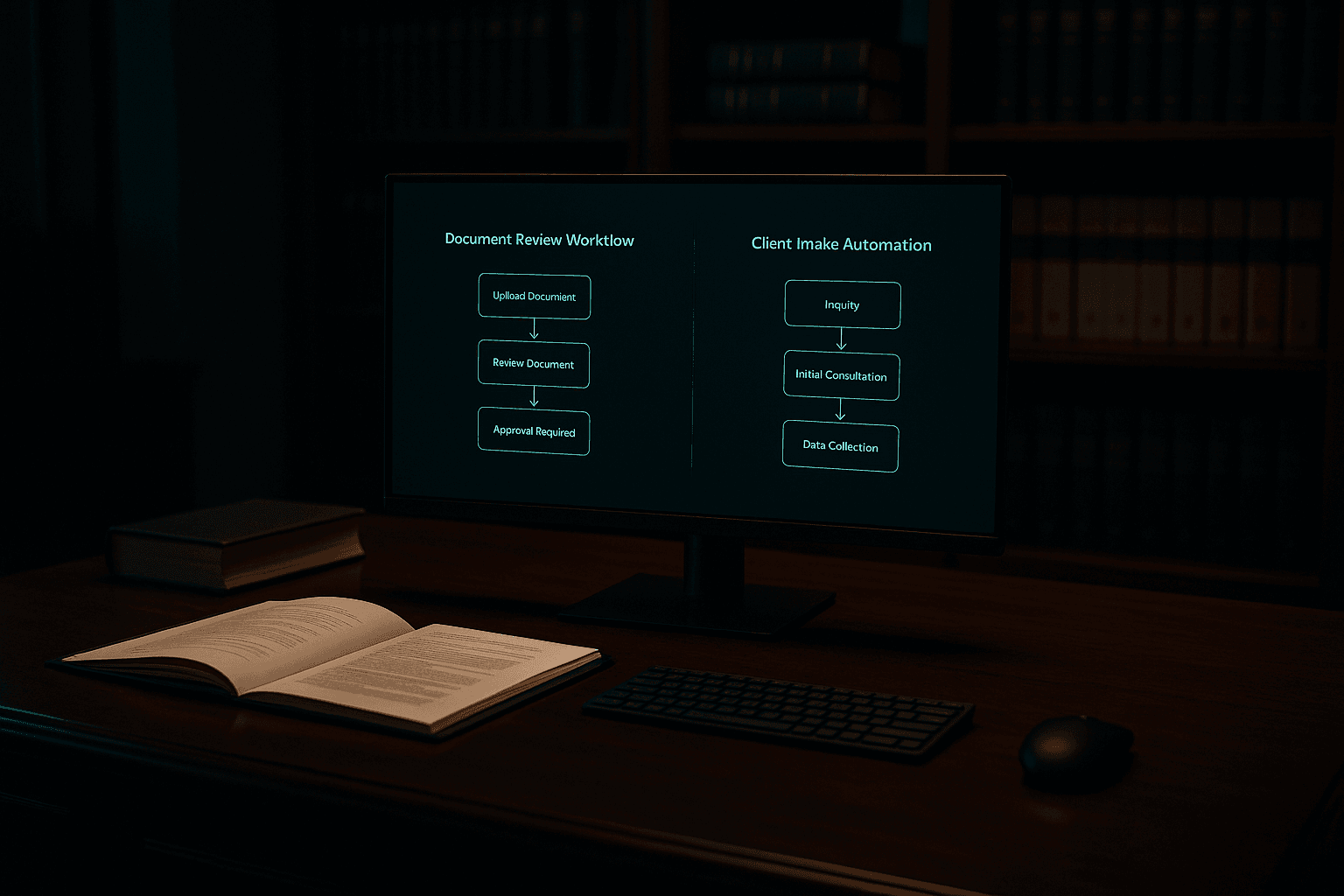
A new type of firm is entering your market. They are not better at the work. They are faster and cheaper at everything around the work. They write proposals in an hour that used to take a day. They onboard clients in two days instead of two weeks. They deliver research-backed reports in a fraction of the time. And they do all of this with a team half the size of yours.
These are AI-native professional services firms, and they are setting a new baseline for what clients expect in terms of speed and responsiveness. If your firm is still doing most of this work manually, the gap is real and it is growing.
Where does AI create the most value for professional services firms?
AI creates the most value for professional services firms in proposals, onboarding, research assembly, and internal coordination. Those workflows consume non-billable time, follow repeatable patterns, and directly affect speed, margin, and client responsiveness.
Where the Time Goes
Before looking at solutions, it helps to be honest about where time is going. In our experience working with consulting firms, law firms, accounting practices, and other professional services organizations, the same four areas consume a disproportionate share of non-billable hours.
Writing proposals from scratch
Every new proposal starts with a blank document and ends with two or three hours of work that looks almost identical to the last proposal you wrote. The client type is similar, the scope is familiar, the pricing structure follows the same logic. But every time, someone builds it from scratch. Across a year, this adds up to hundreds of hours that could be spent on client work.
Client onboarding back-and-forth
Onboarding a new client involves collecting the same information every time: intake forms, contracts, background materials, access credentials. The emails go back and forth. Something gets missed. Someone follows up. A week passes. The actual work has not started yet, but the firm has already spent significant time on coordination that a system should be handling.
Research and report building
For firms that deliver analysis and recommendations, research and report assembly is often the most time-consuming part of the engagement. Pulling data from multiple sources, synthesizing findings, writing summaries, formatting outputs. Most of this is systematic work that follows a repeatable structure, which makes it exactly the kind of work that AI handles well.
Internal status updates and coordination
Project status updates, internal briefings, meeting summaries, handoff notes. Every professional services firm has some version of this overhead. People write updates that get read once and filed. Meetings produce action items that someone transcribes manually. This is coordination infrastructure, and it absorbs hours that no client ever pays for.
What Automation Looks Like in Practice
This is where most articles get abstract. Here is what these firms are doing right now.
Proposals: A trained AI system takes the client intake information, pulls from a library of pre-approved language, and produces a first-draft proposal in under ten minutes. A senior person reviews it, adjusts the scope and pricing, and sends it. Total time: 30 to 45 minutes instead of two to three hours. The quality is the same or better because the system draws from your best past work, not whatever the person writing it remembers.
Onboarding: An automated onboarding sequence handles the intake process end-to-end. The client fills out one form. The system routes the information to the right places, generates the engagement letter, and triggers the internal kickoff process. By the time a human needs to get involved, everything is already in place. What used to take a week of back-and-forth takes two days, most of which is the client's response time.
Research and reports: AI tools pull from structured sources and produce first drafts of research summaries and report sections. A consultant reviews, edits, and adds the analysis that requires judgment. The hours spent on formatting, pulling citations, and writing boilerplate sections disappear. The hours spent on actual thinking stay.
Status updates and coordination: Meeting transcription tools capture calls and produce summaries with action items automatically. Project status updates pull from your project management system and draft themselves. The person responsible reviews, adjusts, and sends. Fifteen minutes instead of an hour.
Will Clients Notice?
This is the objection we hear most often: "If we use AI, will clients think we are cutting corners?"
The answer is no, and here is why.
Speed and quality are not in conflict when the AI is handling administration. When AI writes your first-draft proposal, a senior person still reviews and approves it. When AI handles onboarding logistics, your team still does the actual client work. When AI produces a research summary, a consultant still provides the analysis and recommendations.
What clients experience is faster responses, more consistent communication, and better-organized deliverables. That is not cutting corners. That is a more professional operation.
The firms that are winning on this are not hiding the fact that they use AI tools. They are positioning it as evidence that they run a tight, modern practice. Clients are not asking whether you use AI. They are asking whether you deliver what you promised, on time and at a fair price. AI helps you do that.
How to Start Without Disrupting What's Working
The mistake is trying to automate everything at once. The right starting point is the one workflow that eats the most non-billable time in your firm right now.
For most professional services firms, that is either proposal writing or client onboarding. Pick one. Build a working system for that one workflow. Measure the time savings. Get your team comfortable with the new process. Then move to the next one.
A well-executed first workflow delivers visible results fast enough to build internal confidence and justify the next phase of investment. A sprawling transformation project usually stalls before it delivers anything.
You do not need to rebuild your firm. You need to start with the workflow that is costing you the most right now and make it faster and more consistent.
FAQ: What should professional services firms automate first?
What is the best first workflow to automate?
For most firms, the best first workflow is proposal writing or client onboarding because the time drain is obvious and the results are easy to measure.
Will clients think AI lowers quality?
Clients usually care more about speed, accuracy, and responsiveness than whether administrative work was accelerated with AI.
Why do firms lose margin without noticing?
They lose margin in non-billable coordination work that repeats constantly and quietly absorbs hours the client never pays for.
Ready to Compete on Speed?
If you work in professional services and want to understand where AI fits in your operation, we work specifically with consulting firms, agencies, and service businesses to identify the highest-ROI automation opportunities and build systems your team will use.
Learn more about how we work with professional services firms and what a first engagement looks like.
Get the weekly AI brief.
Read by CIOs and ops leaders. One insight per week.